Business Gas Prices 2026: The Complete UK Comparison Guide

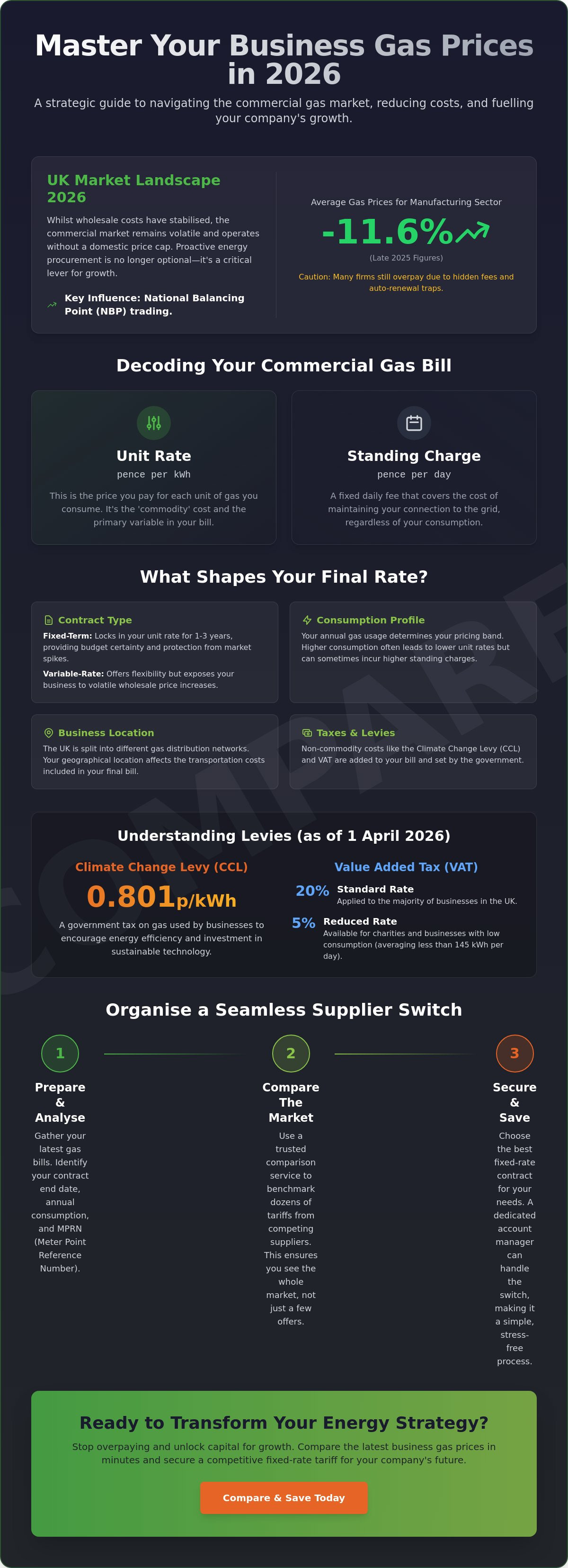
Did you know that whilst average gas prices for the manufacturing sector fell by 11.6% in late 2025, many firms are still overpaying due to hidden broker commissions and auto-renewal traps? You likely feel frustrated by volatile wholesale markets and complex contract jargon that seems designed to confuse rather than clarify. It's time to stop overpaying for business gas prices and start treating your energy procurement as a strategic growth lever.
We're here to help you master these complexities and secure the most competitive rates to fuel your company’s progress throughout 2026. This guide provides a clear roadmap to predictable overheads and transparent contract terms. You'll learn how to navigate the latest 0.801p/kWh Climate Change Levy rates and discover a streamlined switching process that respects your time. Let's transform your utility management into a simple, stress-free solution that supports your long-term development.
Key Takeaways
- Understand the 2026 commercial market dynamics and why business rates differ from domestic price caps.
- Identify the core components of your gas bill to uncover hidden charges and manage your standing costs effectively.
- Benchmark your current business gas prices against the latest UK averages for your specific company size and sector.
- Organise a rapid, stress-free supplier switch by preparing the essential documentation required for a seamless transition.
- Combine smart energy procurement with strategic business finance to fuel your company's long-term growth and sustainability.
Navigating Business Gas Prices in the 2026 UK Market
The UK commercial gas market in 2026 is defined by a shift from survival to strategic optimisation. Whilst wholesale costs have stabilised compared to the extreme peaks of previous years, the landscape remains sensitive to global events. Enterprises now face a market where energy isn't just a background utility; it's a critical component of the balance sheet. Understanding the current state of business gas prices requires looking beyond simple unit rates to the underlying wholesale drivers. Most commercial contracts are influenced by the National Balancing Point (NBP), the virtual trading location for UK gas. Fluctuations here impact your overheads directly because, unlike residential users, businesses operate without the protection of a domestic price cap.
Global volatility continues to test UK enterprise resilience. Geopolitical tensions in the Middle East and shifting supply chains mean that market spikes can happen with little warning. This exposure makes fixed-term contracts a popular choice for firms seeking budget certainty. By prioritising energy efficiency and proactive procurement, your company can transform a volatile expense into a predictable investment. This approach doesn't just lower costs. It supports long-term sustainability and prepares your business for a low-carbon future.
Why 2026 is a Pivotal Year for Energy Strategy
This year represents a turning point for commercial energy management. We've seen a significant shift in wholesale supply chains as the UK further diversifies its gas sources. Government policy is also playing a larger role. The Climate Change Levy (CCL) rate for natural gas increased to 0.801 pence per kWh on 1 April 2026. This tax hike means that doing nothing is no longer an option. Successful firms are moving away from reactive, last-minute switching. Instead, they're adopting proactive strategies that monitor market dips months before a contract expires. This foresight ensures you aren't forced into a high-rate deal during a period of market turbulence.
The Link Between Utility Savings and Business Growth
Reducing your gas bill is one of the fastest ways to inject capital back into your operations. Every pound saved on standing charges or unit rates is a pound that can be redirected toward new equipment, marketing, or staff development. Securing competitive business gas prices is a powerful lever for expansion. In a crowded UK market, high energy efficiency serves as a distinct competitive advantage. It lowers your operational break-even point and improves your margins. We believe in integrating energy strategy with your broader financial planning. When you treat gas procurement as a growth tool rather than a chore, you unlock new levels of corporate agility and financial strength.
Decoding Your Commercial Gas Bill: Unit Rates and Standing Charges
Understanding your bill is the first step to mastering business gas prices. It's not just about the total at the bottom. It's about dissecting the "commodity" from the "non-commodity" costs. Your unit rate represents the price you pay for every kilowatt-hour (kWh) of gas you consume. You can monitor how these rates shift across various industries by reviewing official data on non-domestic sector gas prices. This transparency helps you spot when a supplier's offer is genuinely competitive or simply masked by a low standing charge.
Beyond usage, your location and sector play a significant role in your final costs. Distribution networks charge different rates depending on where your premises sit amongst the UK's regional grids. Manufacturers often see different price structures than retail units due to their unique load profiles. Taxes also weigh in. The Climate Change Levy (CCL) for natural gas is 0.801p/kWh as of April 2026. Most businesses pay a standard 20% VAT. However, charities or low-usage firms consuming less than 145 kWh per day can access a reduced 5% rate. If you're unsure which category you fall into, you can compare business gas rates to see how these levies affect your specific bottom line.
Anatomy of a Business Gas Tariff
Choosing between fixed and variable contracts depends on your risk appetite. Fixed-rate deals lock in your unit price for one to three years, providing a shield against market spikes. Variable-rate contracts offer flexibility but leave you exposed to wholesale price climbs. Your consumption band also dictates your pricing tier. High-usage businesses might secure lower unit rates but face higher standing charges. The standing charge is the daily fee for connection regardless of usage.
Non-Commodity Costs You Need to Know
Non-commodity costs cover the infrastructure and regulatory aspect of your supply. Transportation and distribution charges ensure the gas actually reaches your meter through the national network. In 2026, green levies are structured to fund the transition to renewable alternatives and are typically built into your unit rate. Flexible contracts might include "pass-through" costs. These are charges that the supplier passes directly to you if third-party costs increase. Always check your contract terms to ensure these aren't hidden surprises that inflate your overheads.
Benchmarking Average Business Gas Rates by Sector and Size
Benchmarking is your most powerful tool for cost control. It allows you to see if your current provider is offering a fair deal or if you're subsidising their margins. Business gas prices fluctuate based on consumption volume, meaning a micro-business will naturally face different unit rates than a large industrial plant. Use these benchmarks to audit your latest statement immediately. If your rates sit significantly above these averages, you're likely leaving capital on the table that could fuel your expansion.
For a micro-business using up to 15,000 kWh annually, unit prices averaged around 5.9p/kWh in April 2026 with a 33.9p daily standing charge. Small and medium enterprises (SMEs) often see similar unit rates but experience higher daily standing charges, sometimes reaching 79.2p for medium-sized operations. Large industrial users benefit from wholesale structures that can bring unit rates down to 5.4p/kWh. These larger players access different pricing because they often purchase gas in "blocks" directly from the wholesale market, though they face complex clauses regarding usage fluctuations.
Sector-specific needs also change the landscape. Manufacturing firms saw average prices of 3.5p/kWh in late 2025 due to high-volume, consistent demand. This is significantly lower than retail or hospitality sectors, where peak-time usage and lower total volumes drive costs up. Whilst the UK energy regulator Ofgem sets a price cap for domestic users, currently at 7.33p/kWh inclusive of VAT, businesses must navigate an uncapped market. This makes benchmarking your business gas prices against sector peers vital for maintaining a competitive edge.
2026 Price Trends: What the Data Tells Us
Current 2026 rates show a market finding its feet after the extreme volatility of 2023 and 2024. Wholesale prices have retreated from their historic peaks, but geopolitical events in the Middle East still trigger sudden spikes. Secure your contract during the shoulder seasons, typically spring or autumn, when demand is lower. Strategic firms are now locking in deals twelve months in advance to bypass seasonal winter surges. Don't wait for your renewal window to open; start monitoring market dips today to capture the best value.
Regional Variations Across the UK
Your physical location impacts your bill through the Gas Distribution Network (GDN) charges. There are eight major networks across Britain, and each has a different cost structure for maintaining pipes and infrastructure. Businesses in London and the South East often face higher standing charges due to the complexity of the urban network. Conversely, Northern territories might see lower fixed costs but slightly different unit rates based on their proximity to North Sea terminals. We help you secure nationally competitive rates by comparing suppliers who specialise in your specific region.
How to Organise a Seamless Business Gas Switch
Take control of your energy overheads by streamlining your procurement process. Switching providers isn't just about finding lower business gas prices; it's about securing a partnership that values your time. Start by gathering your latest twelve months of usage data. This allows for a precise comparison based on your actual consumption rather than generic estimates. You'll need a signed Letter of Authority (LOA) to allow your chosen partner to negotiate with suppliers on your behalf. This simple document acts as your digital key to the wholesale market and ensures the process remains entirely hands-off for you.
Avoid the "rollover trap" by marking your contract end date in your calendar today. Many suppliers automatically move businesses onto expensive out-of-contract rates if a new deal isn't signed. These "deemed rates" can be significantly higher than standard fixed tariffs. Transparency is vital during this phase. Demand a clear breakdown of any broker commissions included in your unit rate. Some brokers claim to offer a "no-fee" service whilst hiding their margin in the p/kWh price. A reliable partner will disclose these costs upfront, ensuring you maintain full visibility of your energy spend.
Avoiding Costly Contract Pitfalls
Review your current termination window immediately. Some contracts require a notice period of up to 90 days before you can leave. Missing this window can lock you into another year of sub-optimal rates. Be wary of "flexible" contracts that don't cap pass-through costs, as these can drain your business capital during market spikes. If you want to secure a transparent deal without the stress, compare business gas prices with a partner who prioritises your growth.
The Role of Smart Meters in 2026
Smart technology is the backbone of modern energy management. Automated Meter Reading (AMR) devices eliminate the frustration of estimated billing by sending actual usage data directly to your supplier. This ensures you only pay for the gas you use. For larger users, the transition to half-hourly settlement provides a granular view of consumption patterns. Use this data to identify peak usage times and negotiate better rates during your next renewal. Accurate data is your best leverage when aiming for professional advancement and long-term sustainability.
Securing Your Company’s Future with Smarter Energy Procurement
Mastering your overheads in 2026 requires a shift in perspective. You've seen how volatile wholesale markets and shifting tax rates can impact your bottom line. Now, it's time to move beyond simple cost-cutting and embrace a strategy that fuels your company's expansion. Securing competitive business gas prices is the foundation of this approach. By locking in transparent, reliable rates, you create the financial certainty needed to invest in new talent, technology, and infrastructure. We don't just find you a deal; we provide the clarity you need to lead your business with confidence.
Green Compare stands as the proactive ally for UK SMEs navigating this complex environment. We understand that your time is your most valuable asset. That's why our process is designed for maximum efficiency, moving you from a complex problem to a streamlined solution in record time. Our expertise ensures you avoid the pitfalls of hidden commissions and restrictive contracts, allowing you to focus on what you do best: growing your enterprise. Transparency isn't just a goal for us; it's our standard operating procedure.
Beyond the Bill: A Partnership for Growth
Our vision for the UK business landscape is one of collective progress and sustainability. We believe that utility management should be a catalyst for professional advancement rather than a source of stress. This is why our platform offers an integrated approach to commercial finance. Alongside competitive gas tariffs, we help you manage your Business Electricity and access tailored Business Loans. By centralising these critical financial levers, you gain a holistic view of your operational health. This integrated model allows you to align your energy strategy with your broader funding requirements, creating a robust framework for long-term development.
Take Control of Your Overheads Today
Success in 2026 belongs to the businesses that act with speed and precision. Our efficiency benchmark is designed to save you hours of administrative work, providing rapid results that translate directly into capital savings. Our experts navigate the nuances of the 2026 market on your behalf, ensuring your bespoke quote reflects the most current wholesale trends and regulatory requirements. Don't let your growth be hindered by outdated contracts or inflated "deemed rates." Take the first step toward a more profitable and sustainable future right now.
Compare business gas prices and start your growth journey today
Fuel Your Business Growth in 2026
You now have the tools to transform utility management into a powerful driver of professional advancement. By mastering the components of your commercial bill and benchmarking your rates against the latest averages, you can protect your margins from market volatility. Transparency is your right; always insist on full commission disclosure and leverage smart meter data to negotiate from a position of strength. Managing your business gas prices doesn't have to be a drain on your resources when you have a proactive partner by your side.
We're ready to act as your expert guide, providing access to over 20 UK energy suppliers and a commission transparency guarantee. Our platform goes beyond utilities to offer integrated business finance solutions that support your company's wider development. It's time to move past the stress of rising overheads and start focusing on your long-term success. Get your bespoke business gas quote in minutes and secure the competitive edge your business deserves. Let's build a more efficient, sustainable, and profitable future together.
Frequently Asked Questions
Why are business gas prices higher than domestic rates in 2026?
Commercial rates are higher because they don't benefit from the Ofgem domestic price cap. Businesses also pay a higher standard VAT rate of 20% and the Climate Change Levy (CCL). These additional taxes and the lack of a price ceiling mean your enterprise is more exposed to wholesale market fluctuations than a household.
How much can a typical UK SME save by switching gas suppliers?
Savings depend on your current contract status and annual consumption. Firms moving from expensive out-of-contract "deemed rates" to a competitive fixed-term deal often see the most significant reduction in overheads. Review your latest bill to identify if you're currently paying a premium for loyalty or inaction.
What is a Letter of Authority (LOA) and why do I need one?
A Letter of Authority (LOA) is a legal document that gives us permission to negotiate with suppliers on your behalf. It allows us to gather your usage data and secure the most competitive business gas prices without you having to manage the paperwork. This simple step ensures our experts can act quickly to protect your bottom line.
Can I switch my business gas supplier if I am in a fixed-term contract?
You can't switch to a new provider until your current contract ends, but you can secure your next deal in advance. Most suppliers allow you to lock in business gas prices for a future start date during your renewal window. This window typically opens six to twelve months before your existing agreement expires.
What happens if my business gas supplier goes bust?
Your gas supply will continue without any interruption thanks to the Ofgem safety net. The regulator will automatically appoint a "Supplier of Last Resort" to take over your account and protect any credit balances. You'll be moved to a new tariff, but you should compare rates immediately to ensure you aren't left on an expensive default plan.
Are there any specific gas grants or subsidies for UK businesses in 2026?
Direct cash grants are rare, but you can access significant tax relief through Climate Change Agreements (CCAs). Energy-intensive businesses that meet specific efficiency targets can receive up to an 89% discount on the Climate Change Levy. Focus on these environmental incentives to lower your total energy spend whilst supporting your sustainability goals.
How long does the business gas switching process actually take?
The administrative transition between suppliers usually takes 15 to 30 days. Whilst the technical switch is handled in the background, our efficiency benchmark allows you to compare the market and choose a new deal in just a few minutes. We manage the communication with both providers to ensure a seamless, stress-free experience for your team.
Do I need to install a new meter when I change gas suppliers?
Changing your supplier does not require any physical changes to your meter or pipes. Your gas comes through the same National Grid infrastructure regardless of which company handles your billing. The only change you'll notice is a different name on your invoices and, ideally, a much lower rate for your consumption.