The Ultimate Guide to Business Electricity Comparison in 2026

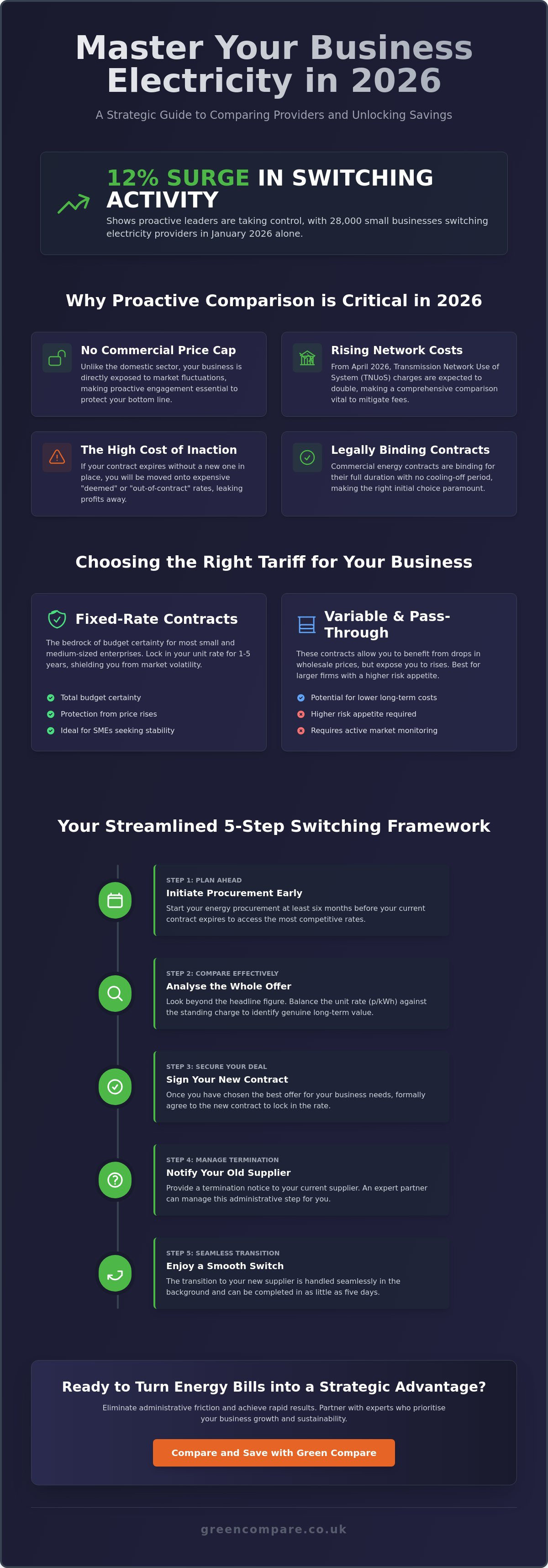
Did you know that 28,000 small businesses switched electricity providers in January 2026 alone? This 12% surge in activity shows that proactive leaders are no longer willing to accept the status quo. If you feel overwhelmed by opaque pricing or the dread of being rolled onto expensive deemed rates, you are not alone. It is frustrating to spend hours on a business electricity comparison only to be met with complex jargon and hidden fees. We understand that your time is your most valuable asset. Every minute spent on admin is a minute taken away from your mission of growth and innovation.
This guide empowers you to master a professional comparison framework designed for the 2026 market. You will discover how to secure the most competitive unit rates whilst ensuring total budget certainty through fixed-term contracts. We promise a seamless, expert-led transition that moves you from high overheads to streamlined savings. We will preview the latest regulatory changes from Ofgem, explain how to navigate rising transmission charges, and show you how to complete a switch in as little as five days. Let's turn your energy bills from a burden into a strategic advantage for your business.
Key Takeaways
- Understand why the lack of a commercial price cap makes proactive market engagement essential for protecting your bottom line.
- Master the business electricity comparison process by balancing unit rates against standing charges to identify genuine long-term value.
- Secure the most competitive rates by initiating your energy procurement at least six months before your current contract expires.
- Streamline your transition with a step-by-step switching framework that manages termination notices and prevents costly rollover tariffs.
- Eliminate administrative friction and achieve rapid results by partnering with experts who prioritise your business growth and sustainability.
What is Business Electricity Comparison and Why Does it Matter in 2026?
A business electricity comparison is far more than a simple price check. It is a systematic evaluation of the entire commercial energy landscape to ensure your enterprise isn't overpaying for a basic necessity. In 2026, the electricity market has become increasingly sophisticated. Volatility is the new normal, and the shift towards decentralised energy means pricing structures are more complex than ever before. You cannot afford to treat your energy bill as a passive overhead.
The cost of inaction is high. If your current contract expires and you fail to switch, your supplier will move you onto "deemed" or "out-of-contract" rates. These are often the most expensive tariffs available. Identify the best rates amongst the various suppliers to protect your margins. By taking control of your procurement strategy, you transform a potentially spiralling expense into a predictable, controllable cost. Don't let your hard-earned profits leak away through administrative oversight.
The Critical Difference Between Domestic and Commercial Energy
Unlike the domestic sector, business energy has no price cap. This means your rates are directly exposed to market fluctuations. You must also remember that commercial contracts are legally binding for their full duration. There is no cooling-off period once you sign. Suppliers tailor their quotes to your specific usage profile, which is why accurate data is vital. Additionally, you need to account for the Climate Change Levy (CCL) and different VAT treatments that don't apply to household bills. It's a different world entirely.
Why 2026 is the Year to Re-evaluate Your Energy Strategy
Market dynamics in 2026 favour the prepared. From April 2026, businesses face a significant increase in non-commodity costs, with Transmission Network Use of System (TNUoS) charges expected to double. This makes a comprehensive business electricity comparison essential to mitigate these rising fees. With the ongoing migration to Market-Wide Half-Hourly Settlement (MHHS), your business has access to more granular data than ever. Use this information to your advantage. Fixed-rate contracts are currently providing much-needed stability against inflationary pressures. View your energy strategy as a pillar of your professional advancement. Secure a deal that supports your long-term growth whilst meeting your environmental commitments today. Speed and accuracy are your greatest allies in this high-stakes environment.
Understanding Business Electricity Tariffs and Pricing Structures
To extract the most value from a business electricity comparison, you must look beyond the headline figures. Commercial energy pricing is a sophisticated puzzle where the unit rate is only one piece. Whilst domestic users focus on a single price cap, your enterprise faces a multi-layered cost structure. This includes wholesale energy prices, network maintenance, and government levies. Understanding these layers allows you to identify which contract aligns with your specific operational rhythm and growth targets.
Your total bill is heavily influenced by non-commodity costs. These fees cover the physical delivery of power through the grid. From April 2026, many businesses will see a significant shift in their overheads as Transmission Network Use of System (TNUoS) charges are expected to double. This makes the "Total Cost" approach essential. You aren't just buying energy; you're paying for the reliability of the infrastructure that keeps your lights on. Even when looking at global trends, such as U.S. commercial electricity rates, it's clear that infrastructure and delivery costs remain a primary driver of corporate energy spend.
Fixed-Rate vs. Variable and Pass-Through Tariffs
Fixed-rate contracts are the bedrock of budget certainty for small and medium-sized enterprises. They lock in your unit rate for one to five years, shielding you from the volatility of the 2026 market. Conversely, larger firms often opt for pass-through or flexible procurement. These contracts allow you to benefit when wholesale prices drop, but they require a higher risk appetite. If you have the internal capacity to monitor market shifts, flexible options can lower your long-term costs. For most growing businesses, the security of a fixed deal provides the peace of mind needed to focus on core operations. You can compare business electricity options today to see which structure fits your current scale.
Deciphering Your Electricity Bill: Unit Rates and Standing Charges
Your bill consists of two main pillars: the unit rate and the standing charge. The unit rate is what you pay for every kilowatt-hour (kWh) you consume. The standing charge is a fixed daily fee that covers grid access and meter maintenance. Be wary of offers that boast an incredibly low unit rate but hide a massive daily standing charge. This is a common tactic that can inflate your total spend, especially for businesses with lower consumption. Always calculate the annualised cost based on your actual usage data. Look for transparency in how these charges are presented to avoid "hidden" fees that only appear after you've signed the contract. A truly professional business electricity comparison will always break these down clearly.
The Strategic Value of Green Tariffs
In 2026, a green tariff is no longer a luxury; it's a strategic corporate asset. Most reputable suppliers now offer 100% renewable electricity backed by Renewable Energy Guarantees of Origin (REGOs). Choosing a green tariff isn't just about environmental responsibility. It's about future-proofing your brand and meeting the expectations of modern clients and investors. As the UK moves closer to its net-zero targets, businesses that adopt renewable energy early often find themselves at a competitive advantage. This is a powerful way to signal your values whilst securing a reliable energy supply for your future.
How to Compare Commercial Electricity Quotes Effectively
Effective procurement starts with precision. Grab your most recent bill; this document is the map for your business electricity comparison journey. Many enterprises make the mistake of treating energy as a last-minute chore. Instead, view it as a strategic exercise. You should begin comparing quotes at least six months before your current contract expires. This window provides the flexibility to monitor market fluctuations and secure a rate when the market dips, rather than being forced into a deal by a looming deadline.
If you choose to work with a specialist partner, you will likely encounter a Letter of Authority (LOA). This document is a powerful tool for efficiency. It grants your partner the permission to negotiate directly with suppliers on your behalf, removing the administrative burden from your desk. It allows for a more aggressive negotiation strategy, as experts can leverage their industry relationships to find deals that aren't always visible on public platforms. This collaborative approach ensures your time remains focused on high-value business activities.
Essential Data Required for an Accurate Quote
Precision is the enemy of "price shocks" during the final contract signing. To receive a valid quote, you must provide specific data points. Ensure you have the following ready:
- Registered business name and site postcode.
- Your Meter Point Administration Number (MPAN), found on your bill.
- Accurate annual consumption figures in kWh.
Suppliers use your Estimated Annual Consumption (EAC) to dictate the rates they are willing to offer. Providing an estimate that is too low can lead to a rejected application later in the process. Accurate data ensures that the initial business electricity comparison results are reflected in your final contract.
Evaluating Supplier Reliability and Service Standards
The "cheapest" supplier on paper may actually be the most expensive in practice if their service is poor. Billing inaccuracies and unresponsive support teams create significant administrative friction. When vetting potential energy partners, look beyond the unit rate. Check Trustpilot ratings and official Ofgem reports regarding complaint handling and billing accuracy. A supplier that offers a slightly higher rate but provides a seamless, digital-first experience often delivers better long-term value. Your goal is to find a partner that mirrors your own commitment to proficiency and reliability. Focus on the total cost of ownership, including the time saved by having a supplier that gets it right the first time.
A Step-by-Step Guide to Switching Your Business Electricity
Moving from a high-cost contract to a competitive rate is a milestone in your professional advancement. Many leaders hesitate to switch because they fear operational downtime or complex technical changes. This is a myth. The transition is purely administrative. You will use the same wires, the same meters, and the same reliable grid. The only difference is the name on your bill and the improved health of your bottom line. Once you have used a business electricity comparison to identify your ideal partner, the execution phase is fast and logical.
Your journey toward better efficiency starts with the renewal window. This is the specific period before your current deal ends when you can negotiate a new agreement without penalty. Check your current contract immediately to identify your notice period. You must issue a formal termination notice within this timeframe to prevent your current supplier from trapping you in a "rollover" contract. These automatic extensions often come with significantly higher rates that can stifle your growth for another year or more.
Navigating the Renewal Window and Termination Notices
Be proactive with your notice period. Whilst some microbusinesses have shorter timelines, most enterprises must provide written notice 30 to 90 days before their contract expires. Don't wait for your supplier to reach out; they rarely offer their most competitive rates to existing customers without a challenge. Use your business electricity comparison data as leverage during negotiations. If your current provider won't match the market, proceed with the switch. A proactive stance ensures you remain in control of your overheads rather than being at the mercy of default pricing.
The Final Handover: Meter Readings and First Bills
Precision on your "go-live" date prevents billing disputes and ensures a stress-free transition. On the day your new contract starts, take a clear photo of your meter. Submit this reading to both your old and new suppliers immediately. This evidence ensures the final settlement from your previous provider aligns perfectly with the opening balance of your new one. Coordination between suppliers happens behind the scenes, but your recorded data is the ultimate safeguard against being double-billed.
When your first bill arrives, scrutinise it with care. Verify that the unit rate and standing charge match your signed agreement exactly. Check for any unexpected additions or levies that weren't in the original quote. This final step confirms that your transition to a more efficient energy strategy is complete and functioning as intended. Ready to secure your next contract? Compare business electricity options now and accelerate your path to smarter overhead management.
Why Choose Green Compare for Your Commercial Utility Strategy
Choosing a partner for your business electricity comparison is a decision that impacts your operational agility for years to come. In a market defined by the rapid shifts of 2026, you need more than a digital tool; you need a proactive ally. We position ourselves as an extension of your team, dedicated to removing the administrative friction that often stalls corporate progress. Our efficiency-first approach ensures you move from a complex procurement problem to a streamlined solution with quantified results. By handling the heavy lifting, we allow you to refocus your energy on what truly matters: growing your enterprise and leading your industry.
We believe in the power of collective progress. When UK businesses thrive through smarter procurement, the entire economy gains momentum. Our role is to provide the expert guidance necessary to navigate the 2026 energy landscape with confidence. We don't just find a lower rate; we build a foundation for your professional advancement. Experience a service that values your time as much as you do, delivering rapid results through a transparent and reliable process.
Expert Guidance in a Complex Market
Our specialists possess a deep understanding of the unique challenges facing different industries today. We identify the best business electricity rates tailored specifically to your sector, whether you manage a high-consumption manufacturing plant or a boutique retail chain. We take full responsibility for the Letter of Authority (LOA) process, negotiating directly with suppliers to secure terms that align with your growth targets. This expert-led management eliminates the risk of errors and ensures you never miss a critical renewal window. Our commitment to transparency means you receive clear, honest advice without the hidden commissions that plague traditional brokerage models. We are your reliable guide in a volatile world.
Beyond Electricity: A Holistic Approach to Business Overhead
Efficiency is most effective when applied across your entire operational footprint. Whilst securing the right electricity contract is vital, it is often just one part of a larger financial picture. We offer a holistic strategy that includes expert assistance with Business Gas and tailored Business Loans to support your capital requirements. Consolidating your utility and finance management through a single, expert partner can save you up to 80% of the time typically spent on manual comparisons and applications.
This integrated approach leads to significant temporal and financial savings, allowing for a more cohesive budget strategy. We invite you to experience our streamlined process today. Let us transform your mundane administrative tasks into a narrative of empowerment and sustainability. Secure your future by partnering with a team that is genuinely invested in your long-term development. Start your journey toward optimised overheads now and join the thousands of UK businesses moving forward with clarity and purpose.
Take Control of Your Energy Future Today
The 2026 energy market demands a proactive stance. By mastering the nuances of unit rates and navigating the complexities of rising non-commodity costs, you've already taken the first step toward professional advancement. Remember that a thorough business electricity comparison is not just about saving money; it's about building budget certainty and aligning your enterprise with sustainable, forward-thinking values. Don't let your contract roll over into expensive default rates when a more efficient solution is within reach.
Our specialists are ready to guide you through every step of the procurement journey. We leverage over 7 years of commercial utility expertise to provide you with access to a wide panel of leading UK energy suppliers. Our rapid, transparent comparison process is designed to save you time and eliminate the stress of administrative friction. Secure your competitive business electricity quote with Green Compare today and transform your utility strategy into a pillar of growth. We are here to help your business thrive in an ever-changing landscape.
Frequently Asked Questions
Is it always cheaper to switch business electricity suppliers?
Switching is almost always more cost-effective than remaining on a standard variable or out-of-contract rate. When your fixed-term deal ends, your current supplier will move you to their most expensive tariff by default. By conducting a proactive business electricity comparison, you can secure lower unit rates and standing charges that reflect current wholesale market conditions rather than punitive default prices. It is a vital step for protecting your profit margins.
How long does the business electricity switching process actually take?
The switching timeline depends on your business size and current contract status. For microbusinesses, the process can take as little as five days under current regulations. Larger industrial and commercial enterprises typically see a transition period of up to four weeks. This duration allows for the necessary coordination between your old and new suppliers to ensure a seamless administrative handover. We work to ensure this process is as rapid and stress-free as possible.
What is a Letter of Authority (LOA) and why do I need one?
A Letter of Authority is a legal document that grants a third-party partner the permission to act on your behalf with energy suppliers. It allows your chosen expert to gather usage data, negotiate rates, and manage the administrative burden of the switch. This tool is essential for efficiency; it enables professional negotiators to secure the most competitive deals without requiring your constant direct involvement in technical discussions. It is a cornerstone of a collaborative partnership.
Can I switch my business electricity if I am in a debt position with my current supplier?
You generally cannot switch suppliers if you have an outstanding debt that has been on your account for more than 28 days. Your current provider has the right to object to the transfer until the balance is cleared. If you are in a debt position, we recommend settling the arrears or setting up a payment plan before initiating a new business electricity comparison. This ensures a smooth transition to a more affordable contract once your account is clear.
Will my business experience any power cuts during the switch?
No, your business will not experience any interruption to its power supply during the switching process. The transition is purely administrative and involves the transfer of billing and data management rather than physical infrastructure changes. You will continue to use the same wires and meters provided by your local network operator; this ensures your operations remain fully functional throughout the handover. You can focus on growth whilst we manage the technicalities.
What happens if I move my business to new premises mid-contract?
Moving premises usually triggers a "Change of Tenancy" (CoT) process, which allows you to terminate your current contract at the old site. You are not typically legally bound to take your existing supplier to your new location. This provides a strategic opportunity to re-evaluate your requirements and secure a fresh contract that better suits the usage profile of your new business environment. It is a moment for professional advancement and cost optimisation.
Are there specific green electricity tariffs for small businesses?
Yes, many UK suppliers now offer 100% renewable electricity tariffs specifically designed for small and medium-sized enterprises. These tariffs are backed by Renewable Energy Guarantees of Origin (REGOs), proving that the energy was generated from green sources like wind or solar. Adopting these options is an excellent way to enhance your brand reputation whilst contributing to the UK's collective progress toward net-zero targets. It signals a modern, ethically conscious approach to commerce.
How is the Climate Change Levy (CCL) calculated on my business electricity bill?
The Climate Change Levy is a government tax on commercial energy usage, calculated as a flat rate per kilowatt-hour (kWh) of electricity consumed. It appears as a separate line item on your bill and aims to encourage energy efficiency. Some businesses, such as those with very low usage or those in specific energy-intensive sectors with climate change agreements, may be eligible for exemptions or reduced rates. Always check your eligibility to ensure your billing is accurate.