Managing Your Business Gas and Electric Bills: The 2026 Strategy for UK Firms
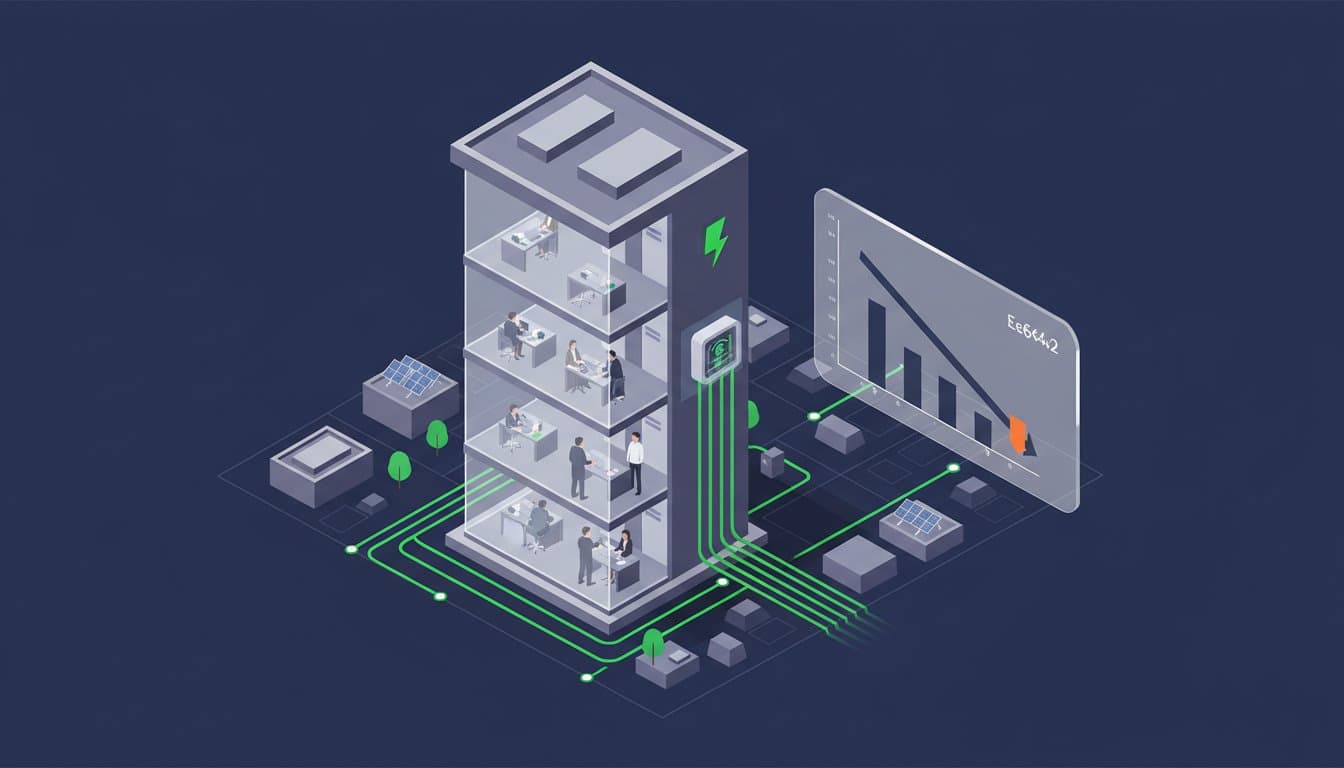
Did you know that non-commodity costs like network charges and policy levies will account for a staggering 68% of your company's electricity bill this year? Managing business gas and electricity costs uk firms face in 2026 requires more than a simple renewal; it demands a strategic hedge against rising TNUoS charges and the new £3.46 per MWh Nuclear RAB Levy. We understand that the absence of a domestic-style price cap makes it difficult to maintain steady cash flow when wholesale prices fluctuate.
You deserve a transparent procurement process that eliminates the stress of opaque billing. We promise to help you master these commercial complexities and organise your energy strategy to protect your bottom line. This guide provides an expert roadmap to lower annual spend and achieve predictable monthly outgoings. Discover how to transform your energy management into a streamlined journey to success and build a brighter, greener future for your business in under 60 seconds.
Key Takeaways
- Understand why the lack of a domestic price cap makes your commercial energy contract a unique legal commitment that requires proactive management.
- Master the anatomy of your bill by identifying how the Climate Change Levy and daily standing charges impact your total annual spend.
- Discover how to effectively manage business gas and electricity costs uk firms face by navigating renewal windows and avoiding expensive rollover rates.
- Take control of your consumption through mandatory smart meter upgrades and professional energy audits to eliminate hidden heat loss in your premises.
- Streamline your journey to success by comparing expert-vetted tariffs and switching to a more affordable plan in under 60 seconds.
Understanding the Rising Cost of Business Gas and Electric Bills in 2026
Managing business gas and electricity costs uk firms encounter involves navigating a complex, high-stakes market. Unlike the domestic sector, where customers are often moved onto rolling tariffs, commercial energy operates through bespoke, legally binding contracts. These agreements are fixed for a specific term, meaning you can't simply leave without facing significant exit fees. In May 2026, the market is stabilising after geopolitical tensions caused volatility, yet prices remain elevated compared to previous years. For a broader UK energy sector overview, it is clear that our reliance on imported gas continues to make the strength of the pound a critical factor in your monthly outgoings.
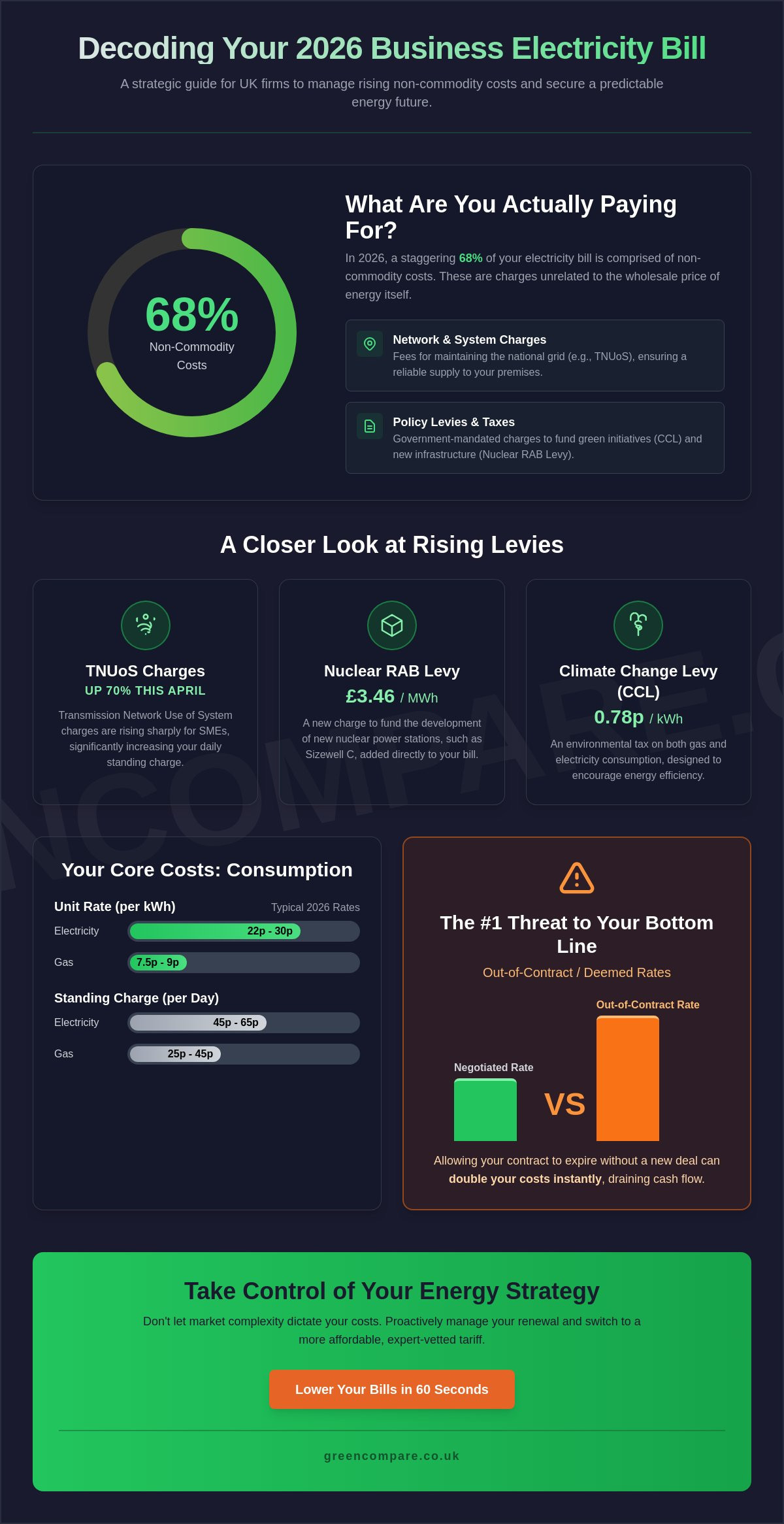
The single biggest threat to your firm's bottom line is falling into 'out-of-contract' rates. When a fixed agreement ends without a new deal in place, suppliers move you to their most expensive pricing tier. These rates can be double the cost of a negotiated contract, draining your cash flow instantly. Staying ahead of your renewal window isn't just good practice; it is essential for survival in the current economic climate.
Why Business Energy Differs from Domestic Supply
The UK Government's domestic price cap offers zero protection for your business. Commercial enterprises are viewed as professional entities capable of negotiating their own terms, leaving you exposed to the full weight of market fluctuations. Your unit rate isn't universal; it's dictated by your specific usage profile. Suppliers analyse whether you consume energy during peak or off-peak hours to determine your risk level. If your organisation manages several UK premises, multi-site billing adds another layer of complexity. Each site may have different meter types and renewal dates, requiring a centralised strategy to avoid overpaying on business gas and electricity costs uk wide.
Market Trends Influencing 2026 Utility Costs
Non-commodity costs are now the primary driver of your energy spend. In 2026, these charges, which include network maintenance and policy levies, make up 68% of the average business electricity bill. This includes the Nuclear RAB Levy, introduced at £3.46 per MWh to fund new infrastructure like Sizewell C. Green levies also play a significant role, with the Climate Change Levy (CCL) currently set at 0.78p/kWh for both gas and electricity. SME owners must prepare for a 70% increase in Transmission Network Use of System (TNUoS) charges this April, which will push standing charges higher than ever before. Deemed Rates are the expensive default prices charged by a supplier when a contract expires and no new agreement has been formally signed.
At Green Compare, we believe this complexity shouldn't hinder your journey to success. We help you cut through the jargon to find affordable, greener solutions that fit your specific needs. By acting now, you can lock in predictable costs and build a brighter future for your company.
Anatomy of a Commercial Bill: What Are You Actually Paying For?
Your monthly statement is a complex document, but it shouldn't be a source of stress. To effectively manage business gas and electricity costs uk firms encounter, you must look beyond the total figure. Your bill is split into two primary components: the unit rate and the daily standing charge. The unit rate, measured in kilowatt-hours (kWh), represents the energy you consume. In 2026, typical electricity rates range between 22p and 30p per kWh, whilst gas averages between 7.5p and 9p per kWh. The standing charge is a fixed daily fee that covers the cost of maintaining the physical connection to the grid. For electricity, this typically sits between 45p and 65p per day; for gas, it is usually 25p to 45p. Even if your premises are closed for a week, these charges still apply.
Transparency is the foundation of a healthy bottom line. Many firms are surprised to find "Pass-Through" charges on their statements. These are costs from third-party network operators that your supplier passes directly to you. Even on some fixed-term contracts, these specific elements can fluctuate if regulatory bodies change the pricing for grid maintenance or balancing. Understanding these nuances is part of your journey to success. If you want to see how your current line items stack up against the market, you can compare commercial tariffs in under 60 seconds.
Taxes and Levies Specific to UK Businesses
The Climate Change Levy (CCL) is a key feature of the 2026 billing landscape. Currently set at 0.78p/kWh for both gas and electricity, this tax supports the UK's transition to a low-carbon economy. While most companies pay the standard 20% VAT, your firm might qualify for the reduced 5% rate. This applies if your "de minimis" usage is less than 33 kWh per day for electricity or 145 kWh per day for gas. Charities and certain non-business organisations also qualify for this lower tier. We recommend reviewing your previous bills; if you've been wrongly charged the 20% rate, you can often claim back overpaid VAT and CCL for the past four years.
Standing Charges and Available Capacity
For industrial or large-scale manufacturing firms, "Available Capacity" (kVA) is a critical charge to monitor. This is essentially a reservation fee for the maximum amount of electricity you could potentially draw from the grid at once. If your kVA is set too high, you are paying for capacity you never use. If it's too low, you face significant "Exceedance" penalties. Ofgem's advice for businesses highlights that regular reviews of your capacity requirements can lead to substantial savings. Always check your supplier's quote for hidden non-commodity costs, such as Reactive Power charges or Feed-in Tariff (FiT) contributions, to ensure you are getting a truly affordable deal.
Fixed vs Flexible: Comparing Commercial Energy Tariffs for UK Firms
Choosing the right energy contract is a pivotal moment in your journey to success. In the current market, managing business gas and electricity costs uk companies face requires a clear understanding of risk. You must decide between the absolute certainty of a fixed-rate deal or the market-responsive nature of a flexible arrangement. Fixed-rate contracts lock in your unit price for one to five years, protecting your cash flow from the sudden wholesale spikes that characterised early 2026. Conversely, flexible tariffs allow you to buy energy in "tranches," potentially saving money if prices drop, though they require a more hands-on approach to procurement.
Rollover contracts remain a significant trap for the unwary. If you fail to act when your current deal ends, your supplier might automatically renew you onto a one-year contract at much higher rates. UK law requires suppliers to send a renewal letter at least 60 days before your contract ends, but the responsibility to negotiate remains with you. As highlighted in the CBI report on business energy costs, proactive energy management is essential for maintaining industrial competitiveness. You should also consider "Pass-Through" contracts. In these agreements, your unit rate is fixed, but third-party costs for using the pipes and wires are charged at cost, which can lead to monthly fluctuations in your total bill.
Termination notice periods are equally critical. Most commercial energy agreements require you to give between 30 and 90 days' notice if you plan to switch. If you miss this window, you could be stuck for another year on a sub-optimal rate. Take control of your schedule now to avoid these avoidable overheads. Our platform helps you compare the latest market offers in under 60 seconds, ensuring you never miss a renewal window again.
The Pros and Cons of Fixed-Rate Contracts
Fixing your rates provides a vital shield against the ongoing volatility of the global energy market. In May 2026, many SMEs are opting for two-year fixes to gain budget stability whilst the UK continues its renewable transition. The main risk is "locking in" at a market peak; if wholesale prices fall significantly during a three-year fix, you'll still pay the higher agreed rate. A Fixed Rate Business Tariff is a contract where the price per kWh remains constant for the term.
When to Consider Flexible or Tranche Purchasing
Larger organisations with high annual consumption often benefit from flexible procurement. This strategy allows you to buy portions of your energy at different times, spreading the risk across the year rather than committing to a single price point. This requires professional energy management or a specialist broker to monitor market trends daily. If you don't choose a fixed or flexible plan, you'll default to Deemed Rates. With electricity deemed rates reaching up to 45p/kWh and gas hitting 14p/kWh, this is a default your business simply cannot afford.
Practical Ways to Organise and Reduce Your Business Energy Consumption
Reducing your usage is the most direct way to lower the business gas and electricity costs uk firms must manage in 2026. Whilst securing a competitive tariff is vital, your journey to success also depends on how efficiently you consume that energy. The mandatory roll-out of Smart Meters has been a game-changer for SMEs, effectively ending the frustration of estimated billing. By providing real-time data, these devices ensure you only pay for what you actually use, allowing you to spot waste immediately. If you haven't yet upgraded, contact your supplier to arrange an installation; it's a simple step that brings instant clarity to your overheads.
Beyond consumption monitoring, many firms are investing in onsite generation to hedge against future price spikes. Engaging with experts like MarGav Solar for professional consultancy and installation ensures your solar PV system is tailored to your specific needs, providing a reliable source of clean energy.
Investing in a professional energy audit often provides a significant return on investment. These experts identify specific areas of heat loss in commercial buildings that are often invisible to the naked eye. Beyond structural fixes, simple technology upgrades can make a massive difference. Switching to LED lighting and installing smart HVAC controls can slash your electricity demand. Don't underestimate the power of your team, either. Clear internal green policies and changes in employee behaviour can reduce total consumption by up to 10% without requiring any capital expenditure. To start your transition to a more efficient model, you can compare greener energy tariffs and see how much you could save today.
The Role of Technology in Efficiency
For high-usage organisations, Half-Hourly (HH) metering is essential. This technology sends your usage data to your supplier every thirty minutes, allowing for incredibly accurate, data-driven procurement. When combined with a Building Management System (BMS) or specialised SaaS tools like EnergoStrateg for CFO-led cost optimisation, you can automate your energy savings by scheduling equipment to power down during off-peak hours. In 2026, many UK firms are also turning to solar PV. Generating your own electricity reduces your reliance on the grid and protects you from the volatile wholesale market, helping you build a brighter future for your business.
Simple Operational Changes for Immediate Savings
You don't always need expensive tech to see results. Quick wins like draught-proofing windows and implementing strict equipment power-down schedules at the end of the day can lead to noticeable savings. For those using commercial gas, regular boiler maintenance is non-negotiable. Professional services from Gas2Heat.com Ltd help ensure your boiler operates much more efficiently, preventing fuel waste and extending the life of your heating system. We also recommend appointing an internal 'energy champion'. This individual can monitor utility waste and keep the team focused on your sustainability goals, ensuring your business remains lean and competitive.
How Green Compare Streamlines Your Journey to Lower Bills
Finding the right path through the commercial energy market shouldn't feel like a solo expedition. At Green Compare, we act as your expert guide, cutting through the jargon to deliver clarity. Our mission is to simplify the way you manage business gas and electricity costs uk wide. We move your company from high overheads to sustainable savings in under 60 seconds. By leveraging our whole-of-market comparison, you gain access to a transparent range of competing suppliers, ensuring you never settle for a sub-optimal rate again.
We believe that managing business gas and electricity costs uk enterprises face should be a proactive partnership. It's not just about a single transaction; it's about helping you build a brighter, greener future. Our platform is designed for speed and precision, matching your specific usage profile with the most affordable tariffs available in May 2026. We're here to alleviate the stress of rising utility prices so you can focus on what matters most: growing your business.
The Green Compare Advantage
Transparency is at the heart of everything we do. Unlike traditional brokers who might obscure their fees, we're committed to full disclosure of broker commissions. This honesty builds trust and ensures you see the true value of every quote. Our expert guides are experts at simplifying complex market data into actionable decisions. We don't just stop at energy; our integrated approach means we can support your firm with both utilities and business loans. This holistic view of your commercial finance helps you organise your outgoings more effectively, creating a stable foundation for long-term success.
Your Next Steps to Success
Starting your journey to success is remarkably simple. Our online comparison process is streamlined to respect your time. Just enter your details, and we'll present the most competitive offers from across the UK market. Once you've selected a plan, we handle the heavy lifting. We provide dedicated support throughout the switching process to ensure there's absolutely zero disruption to your energy supply. You won't need to worry about technical hitches or administrative delays. We're here to make the transition as smooth as possible, helping you secure a better deal with maximum efficiency.
Compare your business gas and electric bills in seconds with Green Compare and take the first step toward a more affordable, greener future today.
Secure Your Commercial Success
Navigating the 2026 energy landscape is a strategic move to protect your firm's profitability. By understanding the nuances of your fixed or flexible contract and reducing unnecessary consumption through smart technology, you've already taken the first steps toward stability. Managing business gas and electricity costs uk companies deal with is much simpler when you have a trusted partner by your side. You now have the tools to move from opaque billing to total financial clarity.
Since 2019, Green Compare has provided expert guidance for UK enterprises. We offer a whole-of-market comparison that ensures you find maximum savings with total transparency. We always disclose our broker commissions because we're genuinely invested in your growth. It's time to compare and save on your business energy in under 60 seconds and eliminate the stress of rising overheads. Let's start your journey to success today and help us build a brighter, greener future together.
Frequently Asked Questions
How do I lower my business gas and electric bills?
Lower your bills by comparing the market and switching to a more competitive tariff as soon as your renewal window opens. Combine this proactive procurement with practical energy-saving measures like LED lighting and draught-proofing. Our platform helps you identify the most affordable deals from a wide range of suppliers to protect your bottom line instantly.
What is the average gas and electric bill for a small business in the UK?
Micro-businesses in 2026 typically pay around £3,600 annually for their combined utility usage. For larger enterprises with higher demand, these annual costs often exceed £19,000. These figures vary based on your specific industry and location, so a bespoke quote is the only way to ensure accuracy for your firm.
Why is my business being charged 20% VAT on energy instead of 5%?
Most commercial entities pay the standard 20% VAT rate unless they meet 'de minimis' usage requirements. You qualify for the reduced 5% rate if your daily consumption is less than 33 kWh for electricity or 145 kWh for gas. Charities and non-business organisations are also eligible for this lower tax tier.
Can I switch business energy suppliers whilst still in a fixed contract?
You can secure a new deal during your renewal window, but the actual switch won't happen until your current contract expires. Leaving a fixed-term agreement early usually results in heavy exit fees. We recommend starting your search six months before your end date to lock in a better rate for your next term.
What is the Climate Change Levy (CCL) and can my business be exempt?
The CCL is a government tax designed to encourage energy efficiency, currently charged at 0.78p/kWh for both gas and electricity. Your business might be exempt if you use very small amounts of energy or operate within an energy-intensive industry with a Climate Change Agreement. Checking your eligibility can lead to significant annual savings.
What happens if I don’t renew my business energy contract on time?
Your supplier will move you onto 'out-of-contract' or 'deemed' rates, which are the most expensive tariffs in the market. These default prices can double your business gas and electricity costs uk wide, draining your cash flow without warning. Always act on your renewal notice to maintain a competitive unit rate.
How long does the commercial energy switching process take?
The physical transfer of your supply usually takes between 15 and 21 days once your existing contract reaches its end date. The initial comparison and selection process on our site takes under 60 seconds. We manage the administrative transition to ensure your business experiences zero disruption to its power or gas supply.
Do I need a smart meter for my business electricity in 2026?
Yes, the nationwide roll-out means most UK businesses are now required to have a smart meter installed. These devices are vital for eliminating estimated bills and providing the granular data needed for half-hourly settlement. They empower you to monitor waste and build a greener, more efficient future for your company.